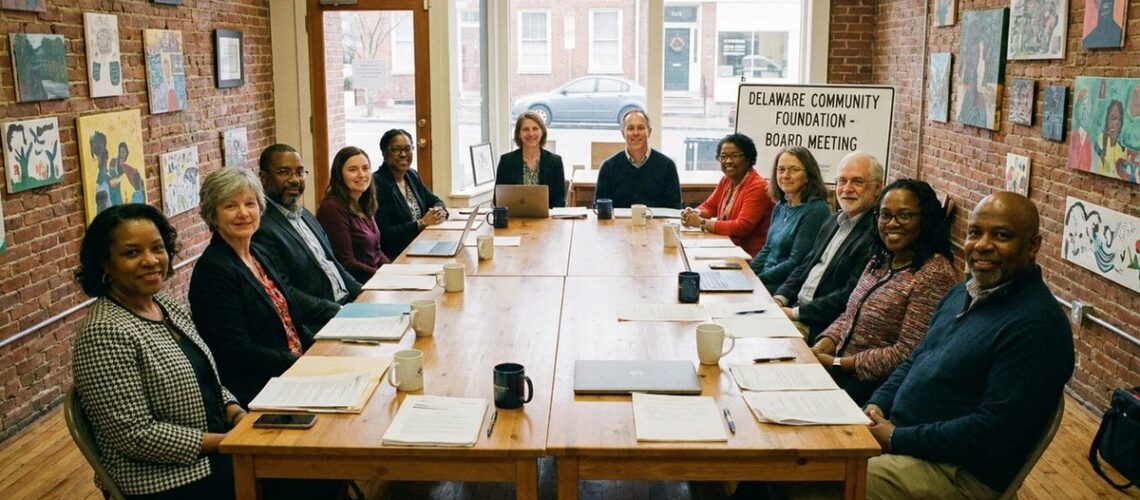
Our Governance Foundation
Friendship House was established in 1985 as a community-based ministry to serve people experiencing homelessness and poverty in Wilmington, Delaware. From its earliest days, the organization has operated under the oversight of a volunteer board of directors — community members who give their time, expertise, and judgment to ensure that Friendship House's programs remain mission-aligned, financially responsible, and accountable to the people we serve.
The board of directors is the legal and fiduciary governing body of Friendship House. Board members carry responsibility for setting organizational strategy, approving the annual budget, overseeing executive leadership, managing risk, and ensuring compliance with federal and state nonprofit regulations. They serve without compensation — their service is itself a form of community investment in Wilmington's most vulnerable residents.
Governance at Friendship House is not a bureaucratic formality. It is the structural expression of our belief that transparency and accountability are inseparable from genuine service. An organization that asks the community to trust it with the care of its most vulnerable members owes that community a clear account of how decisions are made, how resources are managed, and how leadership is held responsible.
Board Structure and Responsibilities
The Friendship House board of directors meets regularly throughout the year, with standing committees addressing specific areas of organizational responsibility. The board's work is organized around several core functions:
- Mission stewardship: Ensuring that all programs and activities remain true to Friendship House's founding purpose — compassionate, practical service to people experiencing homelessness and housing instability in the Wilmington area.
- Financial oversight: Reviewing and approving the annual budget, monitoring financial performance throughout the year, ensuring sound internal controls, and approving any significant financial commitments or transactions.
- Executive leadership: Hiring, evaluating, and supporting the executive director, who manages day-to-day operations and program implementation under the board's direction.
- Strategic planning: Setting organizational priorities for the short and long term, including decisions about program expansion, community partnerships, and resource development.
- Legal compliance: Ensuring that Friendship House meets all obligations under federal tax law (including IRS Form 990 filing requirements), Delaware nonprofit corporation law, and applicable regulations governing service programs.
- Community representation: Maintaining meaningful connections to the faith communities, service organizations, and neighborhood networks that form Friendship House's foundation in Wilmington civic life.
Board committees include a Finance Committee, which conducts detailed review of financial statements and budget proposals before full board consideration; a Personnel Committee, which advises on staffing policies and executive compensation; and an ad hoc Planning Committee that convenes during strategic planning cycles. Committee membership is open to board members and, in some cases, invited community advisors.
Commitment to Transparency and Accountability
Transparency is a value we take seriously, not a compliance checkbox. Friendship House is a community resource — our programs exist because Wilmington residents, faith communities, and partner organizations have invested their trust and support in our work. That trust is honored through openness about how we operate.
Concretely, our commitment to transparency means:
- Filing IRS Form 990 annually and making it available to the public through the ProPublica Nonprofit Explorer (see links below)
- Producing annual reports that describe program outcomes, organizational highlights, and financial summaries in plain language
- Maintaining bylaws that define clear governance structures, board term limits, conflict-of-interest policies, and decision-making procedures
- Responding to document requests from community members, partner organizations, and researchers in a timely manner
- Conducting executive compensation decisions through a transparent, board-documented process that considers comparable organizations and community standards
Friendship House does not have a large development staff or a polished communications operation. We are a small organization focused on direct service. Our transparency practices reflect that scale — straightforward, accessible, and honest about both our accomplishments and our limitations.
Public Documents
Annual Reports
Friendship House prepares an annual report summarizing the prior fiscal year's programs, outcomes, and finances. Annual reports describe the number of individuals and families served across our programs — including the Clothing Bank of Delaware, the Newark Empowerment Center, and housing referral services — and provide a narrative account of significant developments in the organization's work.
Annual reports are available upon written request. To request a copy of a recent annual report, contact Friendship House by phone at (302) 652-8133 or by email at [email protected]. Please specify the year you are requesting. Annual reports are provided at no charge.
IRS Form 990 Filings
As a tax-exempt nonprofit organization, Friendship House is required by the IRS to file an annual information return — Form 990 — disclosing financial information, governance practices, and program activities. Form 990 filings are public documents, and federal law requires nonprofits to make them available upon request.
The most accessible way to view Form 990 filings for Friendship House is through the ProPublica Nonprofit Explorer, a free public resource that aggregates IRS filings for tax-exempt organizations across the United States. Friendship House is listed under its legal name, Friendship House Inc, with EIN 51-0306759, registered in Wilmington, Delaware.
Friendship House Inc
PO BOX 1517, Wilmington, DEForm 990 filings are technical documents that include detailed financial schedules, program descriptions, and information about board composition and governance policies. If you need assistance interpreting a specific filing, Friendship House staff can answer basic questions — contact us using the information in the Contact section.
Bylaws and Governance Framework
Friendship House's bylaws are the foundational legal document that defines how the organization is governed. The bylaws specify the composition and size of the board of directors, procedures for electing and removing board members, meeting requirements and quorum rules, officers' roles and responsibilities, committee structure, conflict-of-interest policy, and amendment procedures.
Key provisions of the current bylaws include:
- Board composition: The board consists of a defined number of voting directors drawn from the community, with representation encouraged from affiliated faith communities, direct service organizations, and individuals with lived experience of homelessness or housing instability.
- Term limits: Board members serve defined terms, with limits on consecutive terms to ensure regular turnover and fresh community input into organizational direction.
- Conflict of interest: Board members must annually disclose potential conflicts of interest and recuse themselves from decisions in which they have a personal or financial stake. The conflict-of-interest policy follows IRS best practices for nonprofit governance.
- Meeting requirements: The full board meets a minimum number of times per year, with additional committee meetings as needed. Attendance requirements ensure active participation.
- Amendment process: Changes to the bylaws require board approval by a supermajority vote, providing stability while allowing the governance framework to evolve as organizational needs change.
A copy of the current bylaws is available upon written request. Contact Friendship House at (302) 652-8133 or [email protected]. We respond to document requests within ten business days.
Leadership Structure
Friendship House operates under a three-tier leadership structure that reflects our organizational scale and our roots in community-based ministry:
Board of Directors
The volunteer board of directors holds ultimate legal and fiduciary authority. Board members bring diverse backgrounds — including social work, healthcare, law, business, and pastoral ministry — and collectively provide the oversight, strategic guidance, and community accountability that the organization requires. The board chair leads board meetings, works closely with the executive director, and represents board decisions to external stakeholders.
Executive Leadership
The executive director manages Friendship House's day-to-day operations, leads the staff team, maintains relationships with partner organizations and funders, and implements the strategic direction established by the board. The executive director reports directly to the board of directors and provides regular programmatic and financial updates at board meetings.
Faith Community Advisory Circle
Friendship House's origins lie in the faith community of Wilmington, and our affiliated faith communities continue to play an important role in our work — providing volunteers, in-kind support, meeting space, and community connections that extend our reach beyond what our small staff could achieve alone. Representatives from affiliated congregations participate in an advisory capacity, providing pastoral perspective and community feedback to organizational leadership. See our Affiliated Faith Communities page for more information.
Financial Stewardship Principles
Friendship House operates with a commitment to frugal, mission-focused financial management. As a small organization serving people in need, we recognize that every dollar in our budget represents a choice about how to deploy limited resources in service of our mission. Our financial stewardship principles guide how we make those choices:
- Program primacy: The largest share of our annual budget goes directly to program costs — the clothing, supplies, staff time, and operational expenses required to run our programs. Administrative overhead is kept to the minimum required to manage the organization responsibly.
- Sustainability over growth: Friendship House does not pursue growth for its own sake. We expand programs when we have confirmed, sustainable funding — not in anticipation of future support that may not materialize. This conservative approach protects program continuity and avoids leaving clients without services if a funding source ends.
- Transparency in finances: Financial statements are presented to the full board at every meeting. The Finance Committee reviews detailed income and expense reports, monitors cash flow, and flags any variances from the approved budget for board discussion.
- Avoiding financial obligations we cannot meet: Friendship House does not carry debt beyond what can be responsibly serviced, and we maintain a modest operating reserve to protect against revenue shortfalls. We do not enter into multi-year financial commitments without confirmed long-term funding.
- Responsible use of in-kind support: Much of Friendship House's program value is delivered through in-kind contributions — donated clothing, volunteer labor, donated meeting space, and contributed goods. We track in-kind support carefully and acknowledge it in financial reporting, as it represents a significant community investment in our work.
Delaware's Nonprofit Governance Landscape
Friendship House operates within a broader ecosystem of Delaware nonprofits that share commitments to community service, financial transparency, and accountable governance. Understanding how peer organizations are structured and funded provides useful context for evaluating Friendship House's own governance practices.
The following organizations, drawn from IRS Form 990 data accessed through the ProPublica Nonprofit Explorer, represent a cross-section of the Wilmington-area nonprofit community focused on housing, homelessness, and community services. Each is an independent organization with its own board, mission, and governance structure — they are listed here for contextual reference only.
Revenue figures from most recent IRS Form 990 filings via ProPublica Nonprofit Explorer. Data is for contextual reference only. Community resource for Delaware — not a solicitation.
How to Request Documents
Friendship House honors document requests from community members, researchers, partner organizations, journalists, and anyone with a legitimate interest in understanding our governance and operations. We do not require requestors to explain their reasons for requesting documents — transparency means making information available without barriers.
To request any of the following — annual reports, Form 990 filings, bylaws, board meeting minutes (non-confidential portions), financial statements, or policy documents — contact Friendship House through the following channels:
PO Box 1517
Wilmington, DE 19899 Include return address for mailed documents
For Form 990 filings specifically, the fastest route is directly through ProPublica Nonprofit Explorer, which provides immediate access to filings without any need to contact us. The IRS also maintains filings through its Tax Exempt Organization Search tool, where you can verify our current 501(c)(3) status and access available filings.
Getting Involved with Friendship House
Strong governance depends on community engagement. Board members are drawn from Wilmington's faith communities, service organizations, and civic networks — people who bring genuine knowledge of the community's needs and a commitment to the organization's mission. If you are interested in learning more about board service or advisory roles at Friendship House, we welcome conversations with community members who share our values.
Beyond board service, there are many ways to support Friendship House's work. Visit our Get Involved page to learn about volunteer opportunities, clothing donations to the Clothing Bank of Delaware, and advocacy activities that support housing stability and homelessness prevention across New Castle County.
To learn more about Friendship House's programs, history, and community role, visit our About page.