Day centers are often the least visible part of the homeless services continuum. Unlike shelters, which provide overnight beds, or transitional housing programs, which offer longer-term placements, day centers operate during the hours when most people are at work or school—and when people without housing have nowhere else to go.
For the individuals who walk through the doors each morning, a day center is not just a place to sit. It is a laundry room, a mailing address, a shower, a meal, a phone charger, and—critically—a place where someone knows your name.
What Happens at a Day Center
A typical day at Friendship House’s day center operations in Wilmington follows a consistent rhythm:
7:30 AM — Doors Open
Clients begin arriving as soon as the doors unlock. Many have been up since 5 or 6 a.m., when overnight shelters require guests to leave for the day. The first priority for most is coffee and breakfast.
8:00–9:00 AM — Breakfast Service
Volunteers and staff serve a hot breakfast. The meal is simple—eggs, toast, oatmeal, fruit, coffee—but for many clients it is their first real meal since dinner the night before. During busy winter months, breakfast may serve 50 or more people.
9:00 AM–12:00 PM — Services and Case Management
The morning hours are the busiest for case management. Clients meet with staff to work on housing applications, benefits enrollment, job searches, and appointment scheduling. The computer stations are in constant use—online job applications, email, and GED prep software are the most common uses.
Showers and laundry facilities operate on a sign-up basis. For someone living outside or in a shelter without these amenities, access to a hot shower and clean clothes can be the difference between attending a job interview and skipping it.
12:00–1:00 PM — Lunch Service
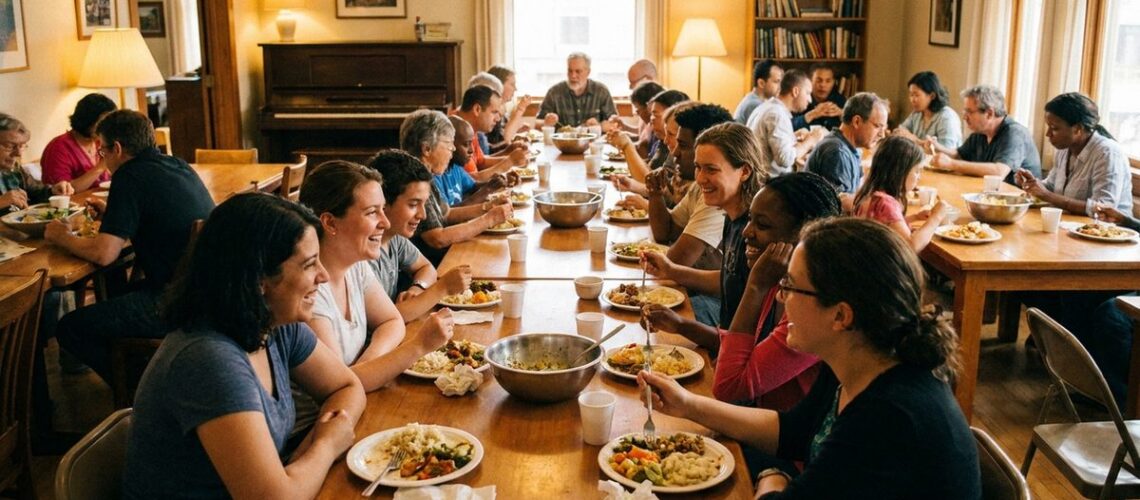
A second hot meal is served. Lunch tends to be the social high point of the day—clients sit together, conversation flows more easily than in the morning, and the atmosphere lightens.
1:00–3:30 PM — Afternoon Programs
Afternoon programming varies by day. Recurring offerings include life skills workshops, health screenings from visiting nurses, legal aid clinics (monthly), and informal support groups. Some afternoons are quieter, with clients resting, reading, or working on personal projects.
4:00 PM — Closing
The center closes in the late afternoon. Clients who have overnight shelter placements head to their assigned locations. Those who do not have shelter make other arrangements—a reality that staff navigate with care and practical resourcefulness, connecting people to warming centers during winter and ensuring everyone knows their options.
Who Uses the Day Center
Day center clients are not a monolithic group. On any given day, you will find:
- People currently in emergency shelter who need a daytime space with services
- People living unsheltered (in cars, tents, or outdoors) who come for meals, showers, and case management
- People in transitional housing who still need access to employment resources or community connections
- Recently housed individuals who return for meals, social connection, or to volunteer
The age range spans from 18 to 75+. Roughly 60% are men, 35% are women, and 5% are nonbinary or gender-nonconforming. Many have one or more co-occurring challenges: mental health conditions, substance use disorders, chronic physical health issues, or histories of trauma.
The Community That Makes It Work
Day centers cannot operate without community support. Friendship House’s day center operations depend on:
- Volunteers for meal preparation, serving, cleanup, front desk operations, and client support. Sign up to volunteer.
- Food donations from local restaurants, grocery stores, and affiliated faith communities who provide meals on rotating schedules
- Supply donations including hygiene products, socks, underwear, towels, and laundry detergent—items that are always in short supply
- Professional volunteers including nurses, lawyers, barbers, and job coaches who donate their expertise on scheduled clinic days
If you have ever wondered what homelessness looks like during the daytime—between the overnight shelter closing and the evening shelter opening—a day center is the answer. It is where the community shows up, in practical and tangible ways, for its most vulnerable members.
Learn more about our programs on the Delaware Homeless Resources page, or visit our Services Directory to find day centers and other resources near you.