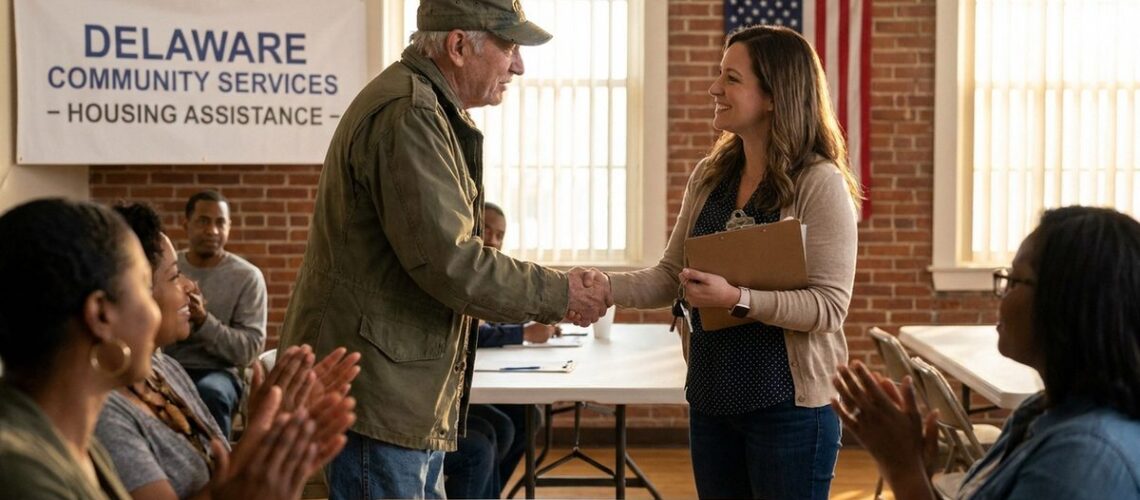
The Scope of Veteran Homelessness in Delaware
Delaware's veteran population numbers approximately 70,000 — a significant share of the state's roughly one million residents. While the majority of veterans in Delaware have transitioned successfully to civilian life, a persistent subset face severe housing instability driven by a combination of service-related trauma, economic disruption, disability, and barriers to accessing benefits. The HUD Point-in-Time count, conducted annually in January by the Delaware Continuum of Care (CoC Code: DE-500), provides the most systematic snapshot of this population.
In 2017, HUD counted 91 veterans experiencing homelessness in Delaware on a single January night. By 2024, that number stood at 89. The relatively stable count over seven years masks important underlying dynamics: targeted federal programs have successfully housed thousands of veterans during this period, but new veterans continue entering homelessness at a rate that prevents the numbers from declining dramatically. Delaware has not yet achieved "functional zero" for veteran homelessness — the federal benchmark indicating the system can house veterans as quickly as they become homeless.
Veteran homelessness in Delaware is not evenly distributed. The majority of homeless veterans are concentrated in New Castle County, particularly in Wilmington, where emergency shelter capacity and service providers are most concentrated. A smaller number of veterans experience homelessness in Kent County (Dover area) and Sussex County, where services are more limited and geographic barriers to accessing help are more pronounced.
Delaware Center for Homeless Veterans: Delaware's Primary Resource
The Delaware Center for Homeless Veterans (DCHV), located at 1200 N. Walnut Street in Wilmington, is the state's largest and most established organization dedicated exclusively to ending veteran homelessness. According to IRS Form 990 data from ProPublica's Nonprofit Explorer, DCHV reported $3,079,617 in annual revenue — the largest of any veteran-focused nonprofit in Delaware by a significant margin.
DCHV operates a 35-bed transitional housing facility that provides structured residential programs for veterans working toward stable, independent housing. The program integrates housing with a full spectrum of supportive services: VA benefits navigation, employment readiness, substance use recovery support, mental health counseling referrals, and peer mentorship from veterans who have successfully transitioned through the program. Residents typically stay for six to twenty-four months depending on individual circumstances.
Beyond residential services, DCHV operates outreach programs that connect with veterans living on the streets or in emergency shelters, helping them navigate the coordinated entry system and access VA benefits they may not know they qualify for. Many veterans — particularly older veterans from the Vietnam and Korea era — have never formally registered with the VA and may be unaware of their eligibility for housing, healthcare, and disability compensation.
The organization's NTEE classification (W30 — Military and Veterans Organizations) and its $3.1 million operating budget reflect a substantial, established presence in Delaware's nonprofit ecosystem. For veterans seeking housing assistance, DCHV is typically the first call beyond the VA's national hotline.
Federal VA Programs: HUD-VASH, SSVF, and Grant Per Diem
Three federal programs form the backbone of veteran housing assistance in Delaware. Understanding how they work — and how to access them — is essential for any veteran or family member navigating a housing crisis.
HUD-VASH: Housing Choice Vouchers for Veterans
The HUD-Veterans Affairs Supportive Housing (HUD-VASH) program combines Housing Choice Vouchers (Section 8) from the Department of Housing and Urban Development with case management services provided by the Department of Veterans Affairs. Veterans with HUD-VASH vouchers can rent from any private landlord willing to participate, with the federal government subsidizing the portion of rent above 30% of the veteran's income.
In Delaware, HUD-VASH vouchers are administered through the Wilmington Housing Authority. The VA Medical Center Wilmington (1601 Kirkwood Highway, Wilmington, DE 19805) manages the case management component, providing regular check-ins and connecting voucher holders with mental health, substance use, and medical services. To apply for HUD-VASH, veterans must be enrolled in VA healthcare and be verified as experiencing or at risk of homelessness. The waiting list can be substantial; early enrollment is strongly encouraged.
SSVF: Supportive Services for Veteran Families
The Supportive Services for Veteran Families (SSVF) program is designed for rapid rehousing — getting veterans and their families out of homelessness and into permanent housing as quickly as possible. SSVF-funded organizations provide short-term financial assistance (covering rent, utility deposits, moving costs) combined with case management to help veterans stabilize. Unlike HUD-VASH, SSVF does not require VA healthcare enrollment, making it accessible to veterans who have not previously engaged with the VA system.
In Delaware, SSVF services are delivered by grantee organizations under contract with the VA. The program can provide up to three months of rental assistance in the first year and one additional month in subsequent years. Veterans who are housed through SSVF and remain stably housed after 90 days are counted as a program success — a metric that drives grantee accountability.
Grant and Per Diem (GPD)
The Grant and Per Diem program funds transitional housing programs operated by community-based nonprofits. The VA pays a per-night rate to organizations like the Delaware Center for Homeless Veterans for each veteran housed in their transitional facility. GPD-funded programs typically provide structured environments with on-site services, case management, and a focus on building the skills and resources needed for successful independent housing. GPD is best suited for veterans who need a longer runway — months rather than weeks — to address the complex barriers preventing stable housing.
State-Level Veteran Services in Delaware
Delaware's Division of Veterans Affairs (DVA), housed within the Department of State, coordinates state-funded programs and services for Delaware's veteran population. The DVA operates regional service offices in Wilmington, Dover, and Georgetown, staffed by Veterans Service Officers (VSOs) who provide free assistance with VA benefit claims — including disability compensation, pension, education benefits, and healthcare enrollment. For veterans who have not yet established VA benefits, a VSO appointment is an essential first step.
The Delaware Veterans Home, located in Milford, provides long-term care for eligible veterans who require assisted living or skilled nursing care. While not a homelessness program per se, the Veterans Home represents an important safety net for older veterans who might otherwise face housing instability due to health limitations. Friends of the Delaware Veterans Home Inc., a nonprofit supporter of the facility, reported $6,627 in IRS revenue — a small volunteer support organization that supplements state-funded programming.
Delaware also participates in the U.S. Department of Labor's VETS programs, which fund employment services for veterans at the state level. The Jobs for Veterans State Grant (JVSG) funds Disabled Veterans Outreach Program (DVOP) specialists and Local Veterans Employment Representatives (LVERs) at Delaware's Division of Employment and Training offices. Employment is a critical determinant of housing stability — a veteran who cannot find work cannot sustain rent.
Challenges Specific to Veterans: PTSD, Substance Use, and Disability
Veteran homelessness is not simply an economic problem. Research consistently shows that veterans experiencing homelessness carry a disproportionate burden of mental health conditions, substance use disorders, and service-connected disabilities — barriers that standard shelter and housing programs are often not equipped to address without specialized support.
Post-Traumatic Stress Disorder (PTSD)
PTSD affects an estimated 20% of veterans who served in Iraq and Afghanistan, and higher rates among Vietnam-era veterans. Untreated PTSD can make it extraordinarily difficult to maintain employment, sustain relationships, and navigate the bureaucratic processes required to access housing and benefits. Symptoms — hypervigilance, emotional numbing, sleep disruption, difficulty concentrating — are barriers not just to getting housed, but to staying housed. Effective treatment exists, and the VA offers evidence-based therapies including Cognitive Processing Therapy (CPT) and Prolonged Exposure (PE), but accessing care requires persistence through a system that many veterans distrust or find difficult to navigate.
Substance Use and Co-Occurring Disorders
Substance use disorders — particularly alcohol use disorder and opioid use disorder — are significantly more prevalent among homeless veterans than in the general veteran population. Research from the National Alliance to End Homelessness suggests that up to 70% of homeless veterans have a co-occurring substance use disorder. Critically, substance use is often a symptom of untreated trauma and mental illness rather than a primary cause of homelessness. Effective programs use a "Housing First" approach — prioritizing stable housing before requiring sobriety or treatment compliance — recognizing that stable housing is itself a therapeutic foundation for recovery.
Service-Connected Disabilities
Many veterans experiencing homelessness have service-connected disabilities that qualify them for VA disability compensation — a monthly, tax-free payment that can significantly support housing stability. However, the claims process is complex and can take months to years without assistance. Veterans who have never filed a claim, or whose claims were denied without appeal, may be missing out on substantial monthly income. Free claims assistance is available through Veterans Service Organizations (VSOs) including the Disabled American Veterans (DAV), which has a Delaware presence in Camden, and Delaware Veterans Inc in Wilmington.
Transition from Military to Civilian Life
The transition from active duty to civilian life represents a period of acute vulnerability for some veterans. The loss of structured routine, built-in community, housing (on-base), and employer-provided healthcare — all at once — can overwhelm veterans who lack strong civilian support networks. Veterans who separate under other-than-honorable (OTH) discharge conditions face additional barriers, as many VA benefits are restricted to veterans with honorable discharges. Advocacy organizations have pushed to expand healthcare access to OTH-discharge veterans, particularly for mental health and substance use treatment, with mixed results at the federal level.
Delaware Veteran-Focused Nonprofits: ProPublica Data
The following directory is compiled from IRS Form 990 data via ProPublica's Nonprofit Explorer. Revenue figures reflect the most recent available filing year. All organizations are Delaware-registered nonprofits with veteran-focused missions.